Lesson 1 — Finding the Right Break
Surf forecasting is often treated like a numbers game: wave height, period, wind speed. But anyone who actually surfs knows that those numbers only make sense when you understand where they apply and why they behave the way they do. This tutorial series is designed to teach you how to think like a forecaster, not just read a forecast. We’ll walk through real surf decisions step by step, using Shaman as a global surf knowledge base — not just a spot report, but a way to search coastlines, compare breaks, understand swell alignment, and reason your way to better sessions. By the end of the series, you won’t just know what the forecast says — you’ll know how to use it.
Step 1 — Start with a spot you actually surf
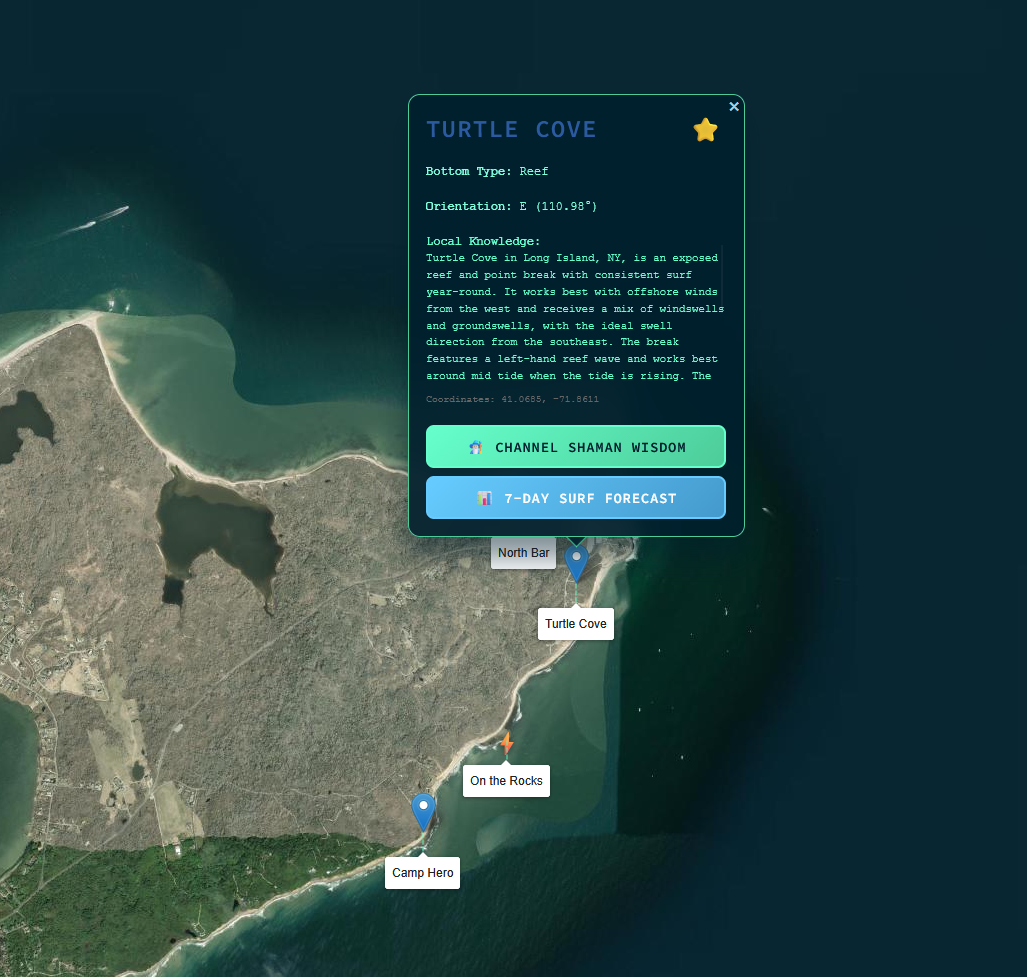
Every forecast begins with context. In this case, the anchor spot is Turtle Cove in Montauk — a place we already understand and care about.
If you like what you read give Shaman a try. Click here to test drive the app!
You can see the full conversation with Shaman at this link for yourself.
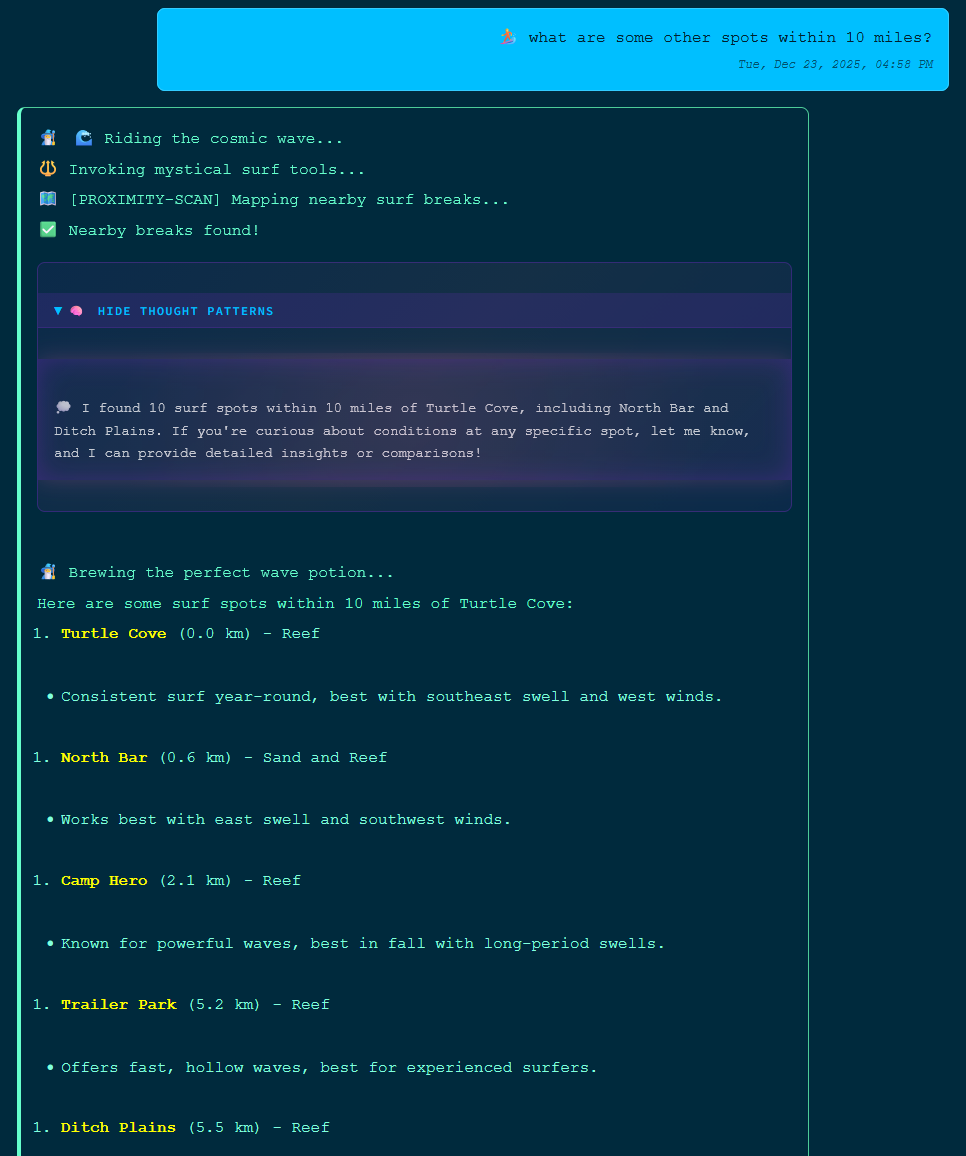
Instead of immediately asking, “How big is it tomorrow?”, we ask a more powerful question:
“What other options do I have near here?”
Using Shaman, we search for nearby surf spots within 10 miles of Turtle Cove. The result is a long list — reefs, sandbars, exposed breaks, protected corners — each with different preferences and personalities.
That list is then filtered down to the five closest spots, giving us a manageable local cluster:
Turtle Cove
North Bar
Camp Hero
Trailer Park
Ditch Plains
This is a critical step. Even though these spots are geographically close, they do not surf the same. Their orientation, bottom type, and exposure vary just enough to matter.
At this point, we haven’t judged the forecast at all — we’ve simply mapped the terrain.
Step 2 — Introduce tomorrow’s swell direction
(and see who it actually favors)
Now we bring the forecast into the picture.
The swell for tomorrow is primarily coming from the southwest, with strong cross-shore winds. Shaman evaluates how this direction aligns with each of the five nearby spots.
Here’s what it finds:
Most of these breaks prefer southeast swell
A southwest swell is off-angle for the majority of them
Strong cross-shore winds further reduce quality
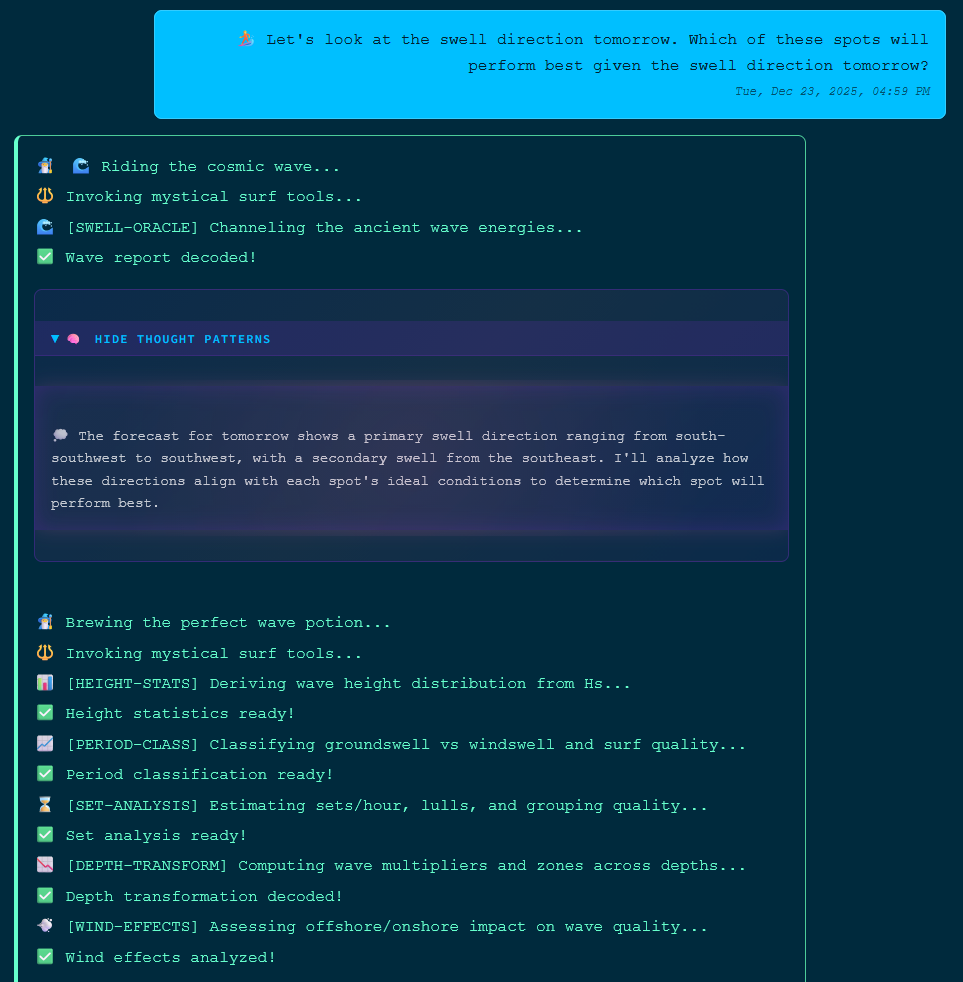
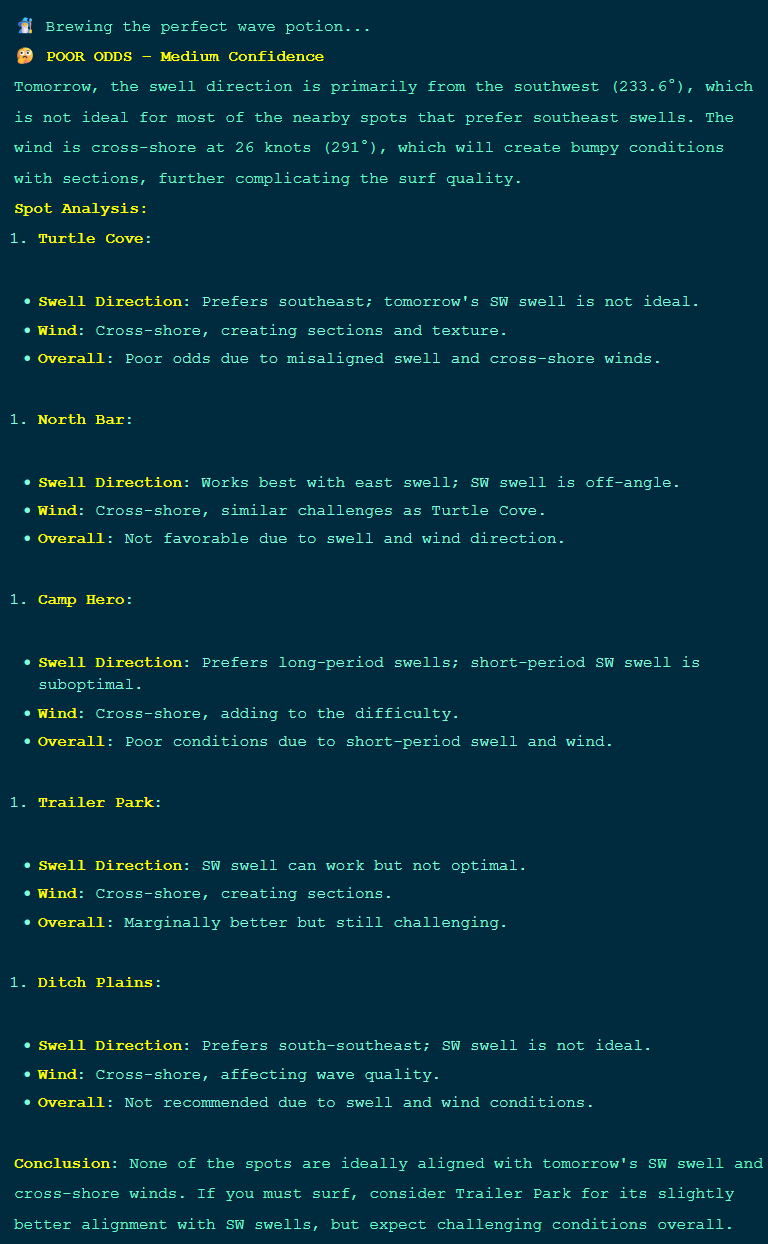
However, Shaman identifies that Trailer Park — while not ideal — has slightly better alignment with a southwest swell compared to the others.
This is an important lesson:
You’re not looking for “perfect.”
You’re looking for least compromised.
Trailer Park isn’t recommended because it’s great — it’s recommended because everything else is worse under these conditions.
Step 3 — Get a focused report for the best candidate
(and accept what the ocean is saying)
Next, we ask for a full report on Trailer Park.
The analysis confirms what the alignment suggested:
short-period windswell
poor set organization
strong cross-shore winds
bumpy, sectiony faces
In short: poor odds.
This is where many surfers either:
paddle out anyway (hope surfing), or
assume they picked the wrong spot
Shaman gives you a third option:
Maybe the spot isn’t the problem. Maybe the day is.
Step 4 — Consider travel: expand the search regionally
Before giving up, we try one more logical move:
“Are there any spots in New York or New Jersey that work well with a southwest swell?”
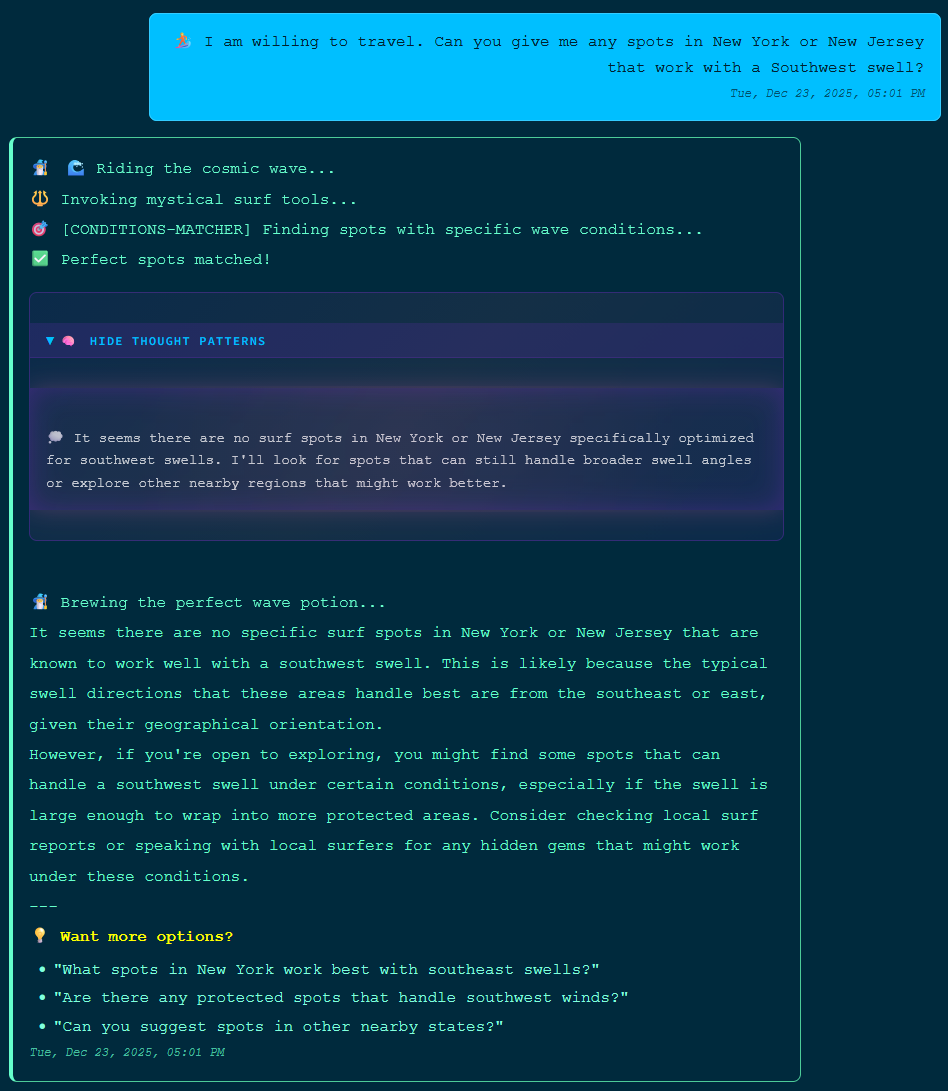
Shaman searches the broader region — not just nearby spots, but the entire coastline logic of NY and NJ.
The result is telling:
There are no spots in this region that are truly optimized for southwest swell
The coastlines here overwhelmingly favor east and southeast energy
A southwest swell would require rare wrapping or very specific local setups
This step matters because it prevents wasted effort.
Instead of driving hours chasing a mirage, Shaman tells you plainly:
Travel won’t fix this. The swell direction just isn’t right for this coast.
Step 5 — Shift strategy: find a better day, not a different place
Now comes the smartest move of the whole workflow.
Instead of forcing tomorrow, you ask:
“How will the swell change this week? Is there a better day?”
Shaman scans the upcoming days and immediately flags something interesting:
🎄 December 25th — a Christmas gift from the ocean.
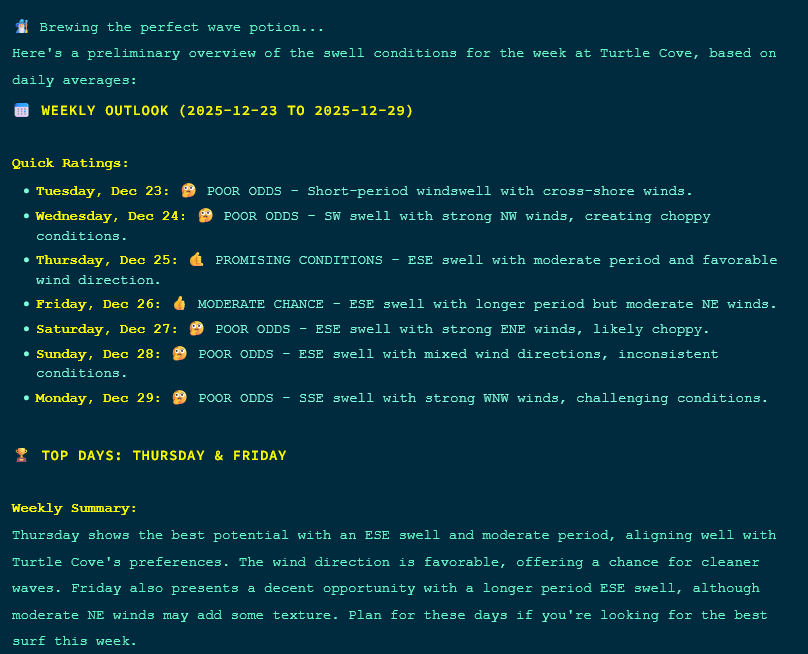
On that day:
the swell shifts to east-southeast
the period improves
wind alignment becomes more favorable
Suddenly, Turtle Cove — the original spot — has a real chance to work.
The ocean didn’t change places.
The timing changed.
Closing — What we learned (and how Shaman got us there)
This lesson wasn’t about wave height.
It was about reasoning.
Here’s what Shaman helped us do:
Start from a known spot instead of guessing
Build a local map of alternatives
Use swell direction to narrow realistic options
Recognize when a region is fundamentally misaligned
Shift focus from where to when
Most importantly, Shaman didn’t just answer questions — it guided the process.
That’s the core idea of this course:
Good surf forecasting isn’t about reading numbers.
It’s about asking better questions, in the right order.
In the next lesson, we’ll dig deeper into swell itself — not just where it’s coming from, but why period and direction matter more than size.
